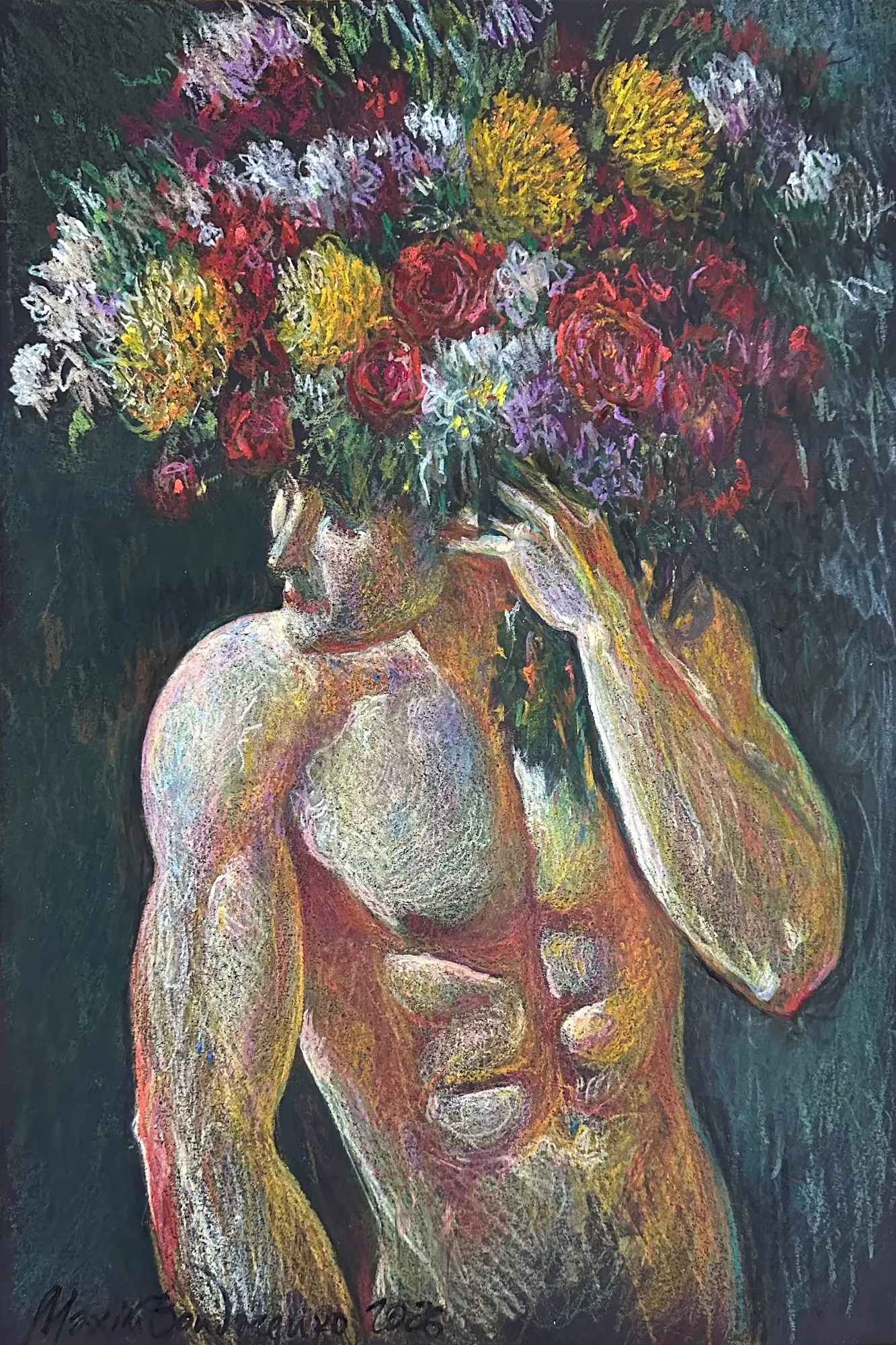
Night Gardener stages a quiet confrontation between darkness and color. The setting is clear: a horizon line with a dusk sky, dark hills, and a figure placed front and center. But the atmosphere isn’t “illustrated” in a literal way; it’s built through pastel behavior—grain, drag, and layered noise that make light feel physical.
The black paper acts like night, swallowing edges and forcing color to declare itself. The sky shifts from cool blue into a narrow band of yellow near the horizon, a simple cue that sets the time of day and the emotional temperature. Against that, the figure’s face carries strong blue and violet tones, as if he’s lit by the sky rather than by a lamp. Warm reds run along the neck and chest, creating a second light source—heat in the body.
What makes the drawing unusual is the surface of the torso. It’s not smooth modeling; it’s a dense, speckled field of marks that reads like dew, ash, or glittering grit. That texture turns the body into terrain. The man becomes another part of the landscape—something weathered, something grown.
The flowers at the bottom do not sit politely as “decoration.” They surge upward from the dark in yellows, magentas, reds, and purples, with quick, scratchy petals that feel improvised and alive. They function as foreground and as counterweight: their brightness pulls the eye down, then the figure’s gaze pulls it back up. The title, Night Gardener, lands here—not as a story, but as a role. The figure feels like someone who belongs to this hour, tending color where it shouldn’t be able to survive.


The work stays open without getting vague. It’s a portrait, a landscape, and a still-life collision, held together by one clear decision: let the night be real, and let the color fight its way through.